Inside AI Search: How Answers Are Becoming More Personal
 techbest@gmail.com
September 1, 2026
techbest@gmail.com
September 1, 2026
Exploring the personalization of AI search technology.
8 min read • 1,634 words
Table of Contents
ToggleInside AI Search: How Answers Are Becoming More Personal
In the rapidly evolving landscape of technology, AI search personalization is transforming the way users interact with information. As AI search algorithms increasingly utilize user data to tailor responses, the relevance and accuracy of search results have improved significantly. This article delves into the mechanisms behind personalized search results and explores why they matter for both users and businesses. Readers will gain insights into how machine learning models analyze past user behavior to predict future queries, ultimately enhancing user engagement and satisfaction.
As AI search tools adapt to individual preferences over time, they not only provide more relevant information but also foster a more engaging user experience. However, this personalization raises important privacy concerns, as the collection and analysis of personal data become more prevalent. Understanding the balance between personalized experiences and privacy is crucial in navigating the future of AI search.
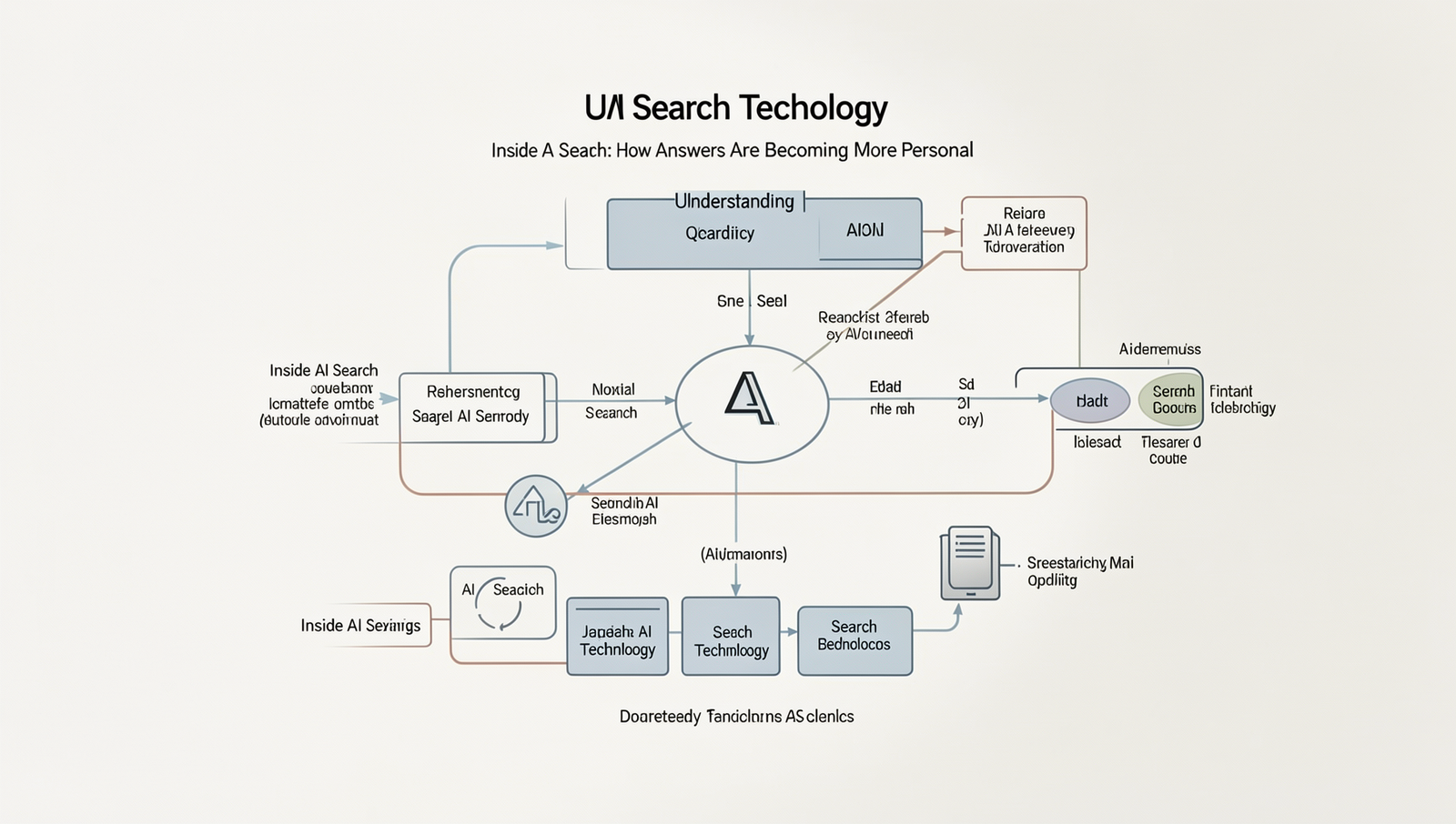
Understanding AI Search Technology
AI search technology has undergone a remarkable evolution over the past few years, transforming the way users interact with information. Traditional search engines primarily relied on keyword matching and basic algorithms to deliver results. However, with advancements in artificial intelligence, search algorithms have become more sophisticated, enabling a deeper understanding of user intent and context.
At the core of AI search systems are several key components:
- Natural Language Processing (NLP): This technology allows machines to understand and interpret human language, making it possible for users to ask questions in a conversational manner.
- Machine Learning: By analyzing vast amounts of data, machine learning algorithms can identify patterns and improve search accuracy over time, adapting to user preferences.
- Data Processing: Efficient data processing is crucial for handling the enormous volumes of information available online, ensuring that relevant results are delivered quickly.
One of the most significant differences between AI search and traditional search engines lies in personalization. Traditional search engines often provide generic results based on keywords alone, while AI search personalization tailors results based on individual user behavior, preferences, and historical data. For example, if a user frequently searches for vegan recipes, an AI search engine will prioritize similar content in future queries.
The role of user data in this personalization process cannot be overstated. By analyzing past interactions, AI search systems can create a unique profile for each user, allowing for a more relevant and engaging search experience. This personalization not only enhances user satisfaction but also increases the likelihood of users returning to the platform for future searches.
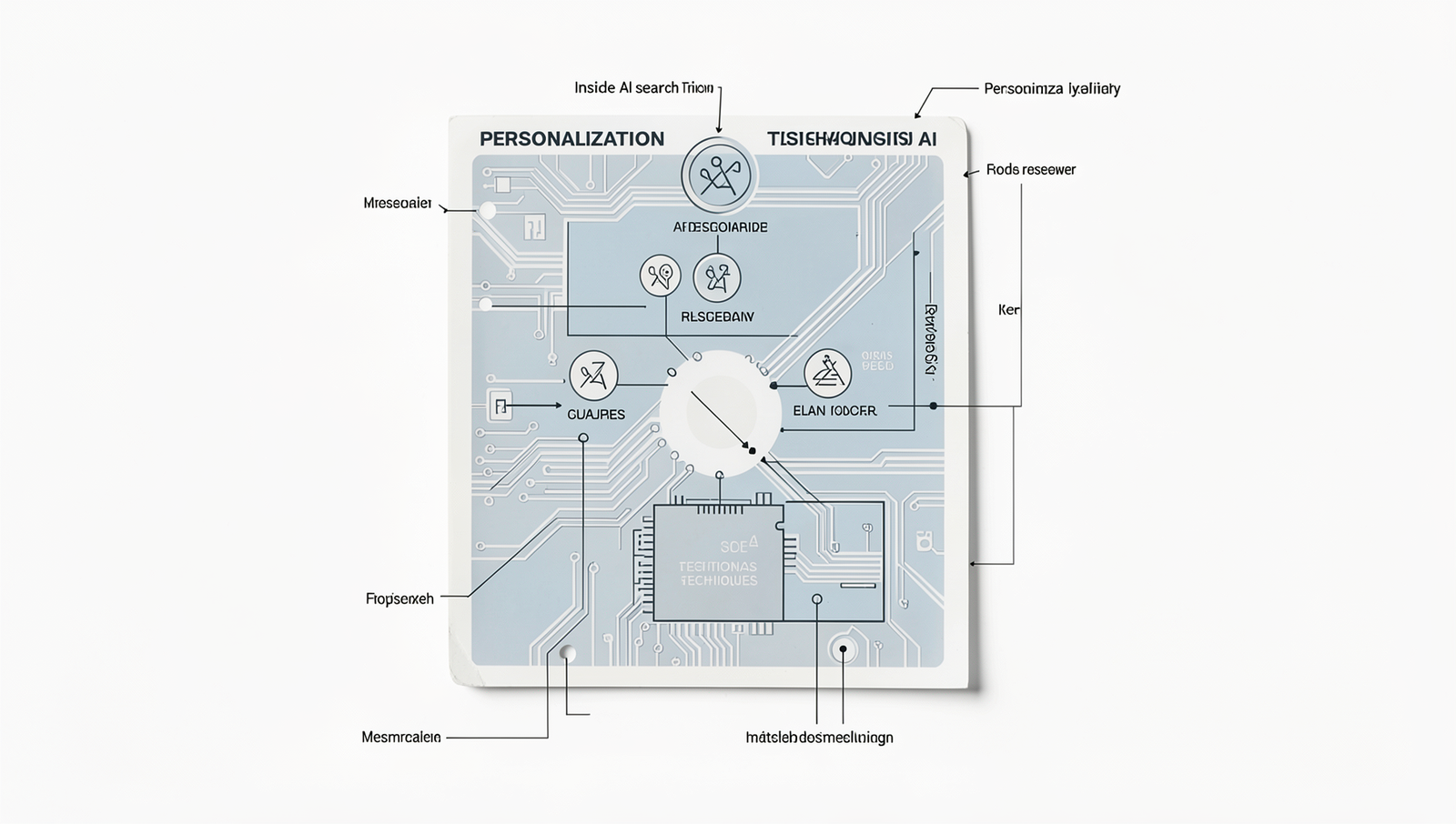
Personalization Techniques in AI Search
AI search personalization is revolutionizing how users interact with search engines and information retrieval systems. By tailoring results to individual preferences and behaviors, these systems enhance user satisfaction and engagement. Several methods are employed to gather user preferences and behavior data, which serve as the foundation for personalization.
- User Profiles: Many platforms create detailed user profiles based on past searches, clicks, and interactions. This data helps in understanding user interests and preferences over time.
- Feedback Mechanisms: Users can provide explicit feedback through ratings or reviews, which can be incorporated into the personalization algorithms.
- Behavioral Tracking: Continuous monitoring of user behavior, such as time spent on certain topics or pages, allows AI systems to adapt and refine search results dynamically.
Machine learning models play a crucial role in AI search personalization. Techniques such as collaborative filtering and content-based filtering are commonly used. Collaborative filtering analyzes patterns from multiple users to identify similarities and recommend content that others with similar tastes have enjoyed. Content-based filtering, on the other hand, focuses on the attributes of items and user preferences to suggest relevant results.
Contextual information significantly impacts search results. Factors such as location, time of day, and device type can influence what users are searching for and how they prefer to receive information. For instance, a user searching for “best coffee shops” in the morning may receive different results than someone searching at night.
However, balancing personalization with privacy concerns presents a challenge. Users are increasingly aware of how their data is used, leading to a demand for transparency and control over personal information. Striking the right balance between delivering personalized experiences and respecting user privacy is essential for the future of AI search personalization.

Real-World Applications of Personalized AI Search
AI search personalization has transformed various industries by tailoring search results to individual user preferences and behaviors. Companies across sectors are leveraging this technology to enhance user experiences and drive engagement. Here are some notable case studies showcasing the successful implementation of personalized AI search.
- E-commerce: Retail giants like Amazon utilize AI search personalization to enhance product recommendations. By analyzing user behavior, purchase history, and browsing patterns, they can suggest products that align with individual preferences. This not only increases conversion rates but also improves customer satisfaction as users find relevant products more easily.
- News and Media: Platforms such as Google News and Flipboard employ AI search personalization to deliver tailored content to users. By considering factors like reading habits and interests, these platforms curate news articles that resonate with individual users. This personalized approach keeps users engaged and encourages them to return for more content.
- Customer Support: Companies like Zendesk have integrated AI search personalization into their customer support systems. By analyzing past interactions and frequently asked questions, they can provide users with relevant answers quickly. This not only improves the user experience but also reduces the workload on support teams, allowing them to focus on more complex issues.
The impact of AI search personalization extends beyond mere convenience. It fosters a deeper connection between users and brands, as personalized experiences lead to increased loyalty and trust. As more companies recognize the value of tailored search results, the trend of AI search personalization is likely to grow, shaping the future of user interactions across various platforms.

Future Trends in AI Search Personalization
As we look ahead, the landscape of AI search personalization is poised for significant advancements. One of the key predictions is the integration of more sophisticated algorithms that can analyze user behavior in real time. This will enable search engines to provide results that are not only relevant but also contextually aware. For instance, if a user frequently searches for vegan recipes, the AI could prioritize plant-based options even if the user’s query is broader, such as “dinner ideas.”
Moreover, ethical considerations are becoming increasingly important in the realm of AI personalization. As search engines gather more data about users, the need for transparency and user consent is paramount. Companies must ensure that they are not only compliant with data protection regulations but also respectful of user privacy. This could involve providing users with more control over their data and how it is used in AI search personalization.
Voice and visual search technologies are also set to play a crucial role in enhancing personalization. With the rise of smart speakers and visual recognition systems, users can interact with search engines in more natural ways. For example, a user might ask a voice assistant for recommendations on nearby restaurants, and the AI could tailor its suggestions based on previous dining preferences and current location.
- Integration of real-time behavior analysis for contextual search results.
- Increased focus on ethical data usage and user privacy.
- Advancements in voice and visual search technologies for personalized interactions.
- Utilization of emerging technologies like augmented reality to enhance user experience.
As these trends unfold, the potential for AI search personalization will continue to evolve, shaping how users interact with information and making their search experiences more intuitive and relevant.
Conclusion
As we have explored, AI search personalization is revolutionizing the way users interact with information. By leveraging advanced algorithms and machine learning techniques, search engines can now deliver tailored results that align closely with individual preferences and behaviors. This personalization not only enhances user satisfaction but also increases engagement, as users are more likely to find relevant content that meets their specific needs. The ability to anticipate user queries and provide contextual answers marks a significant leap forward in search technology.
Looking ahead, the next steps for AI search personalization involve refining these algorithms to further improve accuracy and relevance. Companies must prioritize user privacy and data security while enhancing personalization features. By doing so, they can build trust and encourage more users to embrace these technologies. Ultimately, the future of AI search lies in creating a seamless, intuitive experience that empowers users to access information in a way that feels uniquely tailored to them.
Frequently Asked Questions

What is AI search?
AI search refers to the use of artificial intelligence technologies to enhance the search experience by understanding user intent, context, and preferences. This approach allows search engines to provide more relevant and accurate results tailored to individual users, improving overall satisfaction.

How does AI make answers more personal?
AI personalizes answers by analyzing user behavior, preferences, and previous interactions. By leveraging machine learning algorithms, AI can predict what information a user is likely to find useful, thus delivering tailored responses that resonate with their specific needs and interests.
What technologies are involved in AI search?
AI search utilizes various technologies, including natural language processing (NLP), machine learning, and deep learning. These technologies enable the system to understand and interpret user queries, analyze vast amounts of data, and continuously improve the accuracy of search results over time.
What are the benefits of personalized AI search?
Personalized AI search enhances user experience by providing more relevant results, saving time, and increasing engagement. It helps users discover content that aligns with their interests, leading to higher satisfaction and loyalty, ultimately benefiting both users and content providers.